

YOUR FAMILY DESERVES EXCELLENT DENTAL CARE
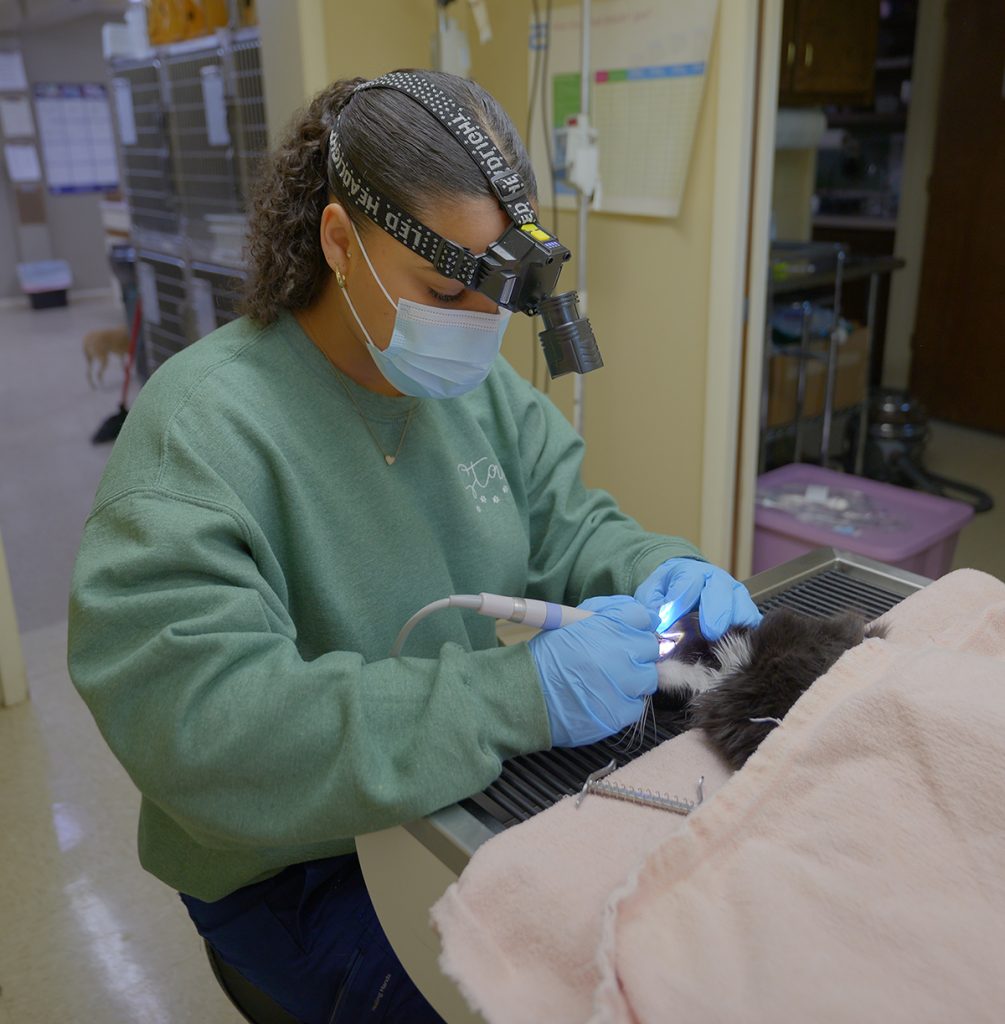
Veterinary dentistry includes the cleaning, adjustment, filing, extraction, or repair of your pet’s teeth and all other aspects of oral health care. The process begins with an oral exam of your pet’s mouth by either Dr. Whitworth or Dr. Rice. We perform digital radiographs (x-rays) to evaluate the health of the jaw and the tooth roots below the gumline. Because most dental disease occurs below the gumline, where you can’t see it, a thorough dental cleaning and evaluation are performed under anesthesia.
Pet Dental Cleaning
Dental cleaning includes scaling (to remove dental plaque and tartar) and polishing, similar to the process used on your own teeth during your regular dental cleanings. We use a modern and safe ultrasonic cleaner to clean each tooth thoroughly, both above and below the gum line. Dental assistants polish teeth to create a smooth surface more resistant to plaque buildup. We apply protective coatings to help delay the buildup of plaque and protect the tooth enamel. If needed, one of the doctors will perform dental extracts of any diseased teeth.
Dental health is a very important part of your pet’s overall health, and dental problems can cause, or be caused by, other health problems. Your pet’s teeth and gums should be checked at least once a year at Whitworth Animal Clinic in Madison, AL to check for early signs of a problem and to keep your pet’s mouth healthy.
The Importance of Healthy Teeth & Gums for Pets
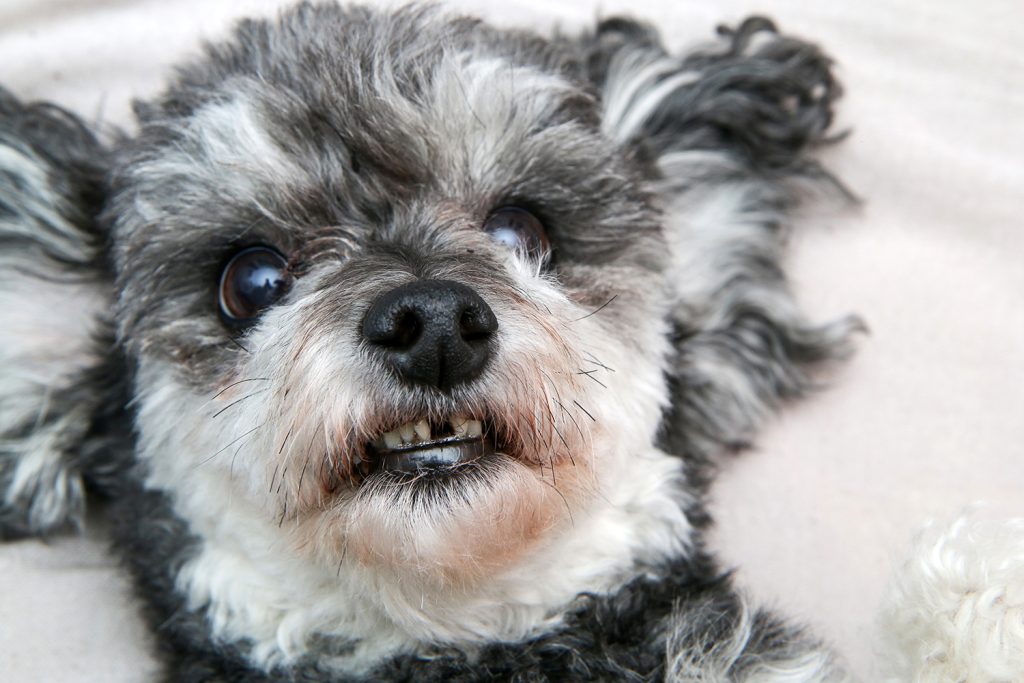
While it is easy to ignore or simply forget, dental disease is the leading illness among cats and dog. Even the most attentive pet parents may fail to notice that their pet is struggling with dental disease, alternatively called periodontal disease.
The symptoms included in the list above can be a strong indication that dental disease is plaguing your pet. If you notice any of these symptoms – particularly if you notice a change in your pet’s eating or drinking habits – give our team a call as soon as you notice. With earlier treatment, periodontal disease is extremely treatable.
Like in humans, periodontal disease in pets is caused by an excessive build up of plaque on your pets’ teeth. We can brush our teeth to loosen plaque, but pets are not able to do this on their own. This results in the plaque forming a film on the teeth which hardens when the bacteria dies, creating more surface area on which more plaque will build. As more and more plaque builds up on your pet’s teeth, it can begin to move below the gum line, which can lead to infections and, if left untreated, permanent damage to your pet’s mouth and jaw.
Trusted Veterinary Dentistry for Madison’s Dogs and Cats
The first step in improving your pet’s oral health is a complete dental exam. If a dental cleaning is recommended for your pet, Dr. Whitworth, Dr. Rice or one of our Whitworth Animal Clinic assistants will discuss the procedure with you. Since most pets are unable to sit calmly in a dental chair with his or her mouth open, we perform dental cleanings while your pet is under anesthesia. Preliminary blood work prior to the dental cleaning is required in order to rule out any underlying health conditions that might make using anesthesia a bad option. For older pets, we run a more comprehensive blood profile.
Dr. Whitworth and his veterinary dentistry staff recommends dental procedures annually for most pets. Ask us about home dental care and procedures that you can do yourself to ensure your pet’s oral health. Make an appointment at Whitworth Animal Clinic in Madison, Alabama, to have your pet’s teeth checked and cleaned.
Tips for Keeping Your Dog’s Teeth Clean & Healthy
Believe it or not, taking care of your dog’s teeth is as important as taking care of your own. According to the American Animal Hospital Association, nearly two-thirds of dog owners do not provide the veterinarian-recommended guidelines for dog dental care. Periodontal disease is the most common clinical condition in adult dogs, and most dogs have some form of the disease by the time they turn 3 years old.
How to Brush a Dog’s Teeth at Home
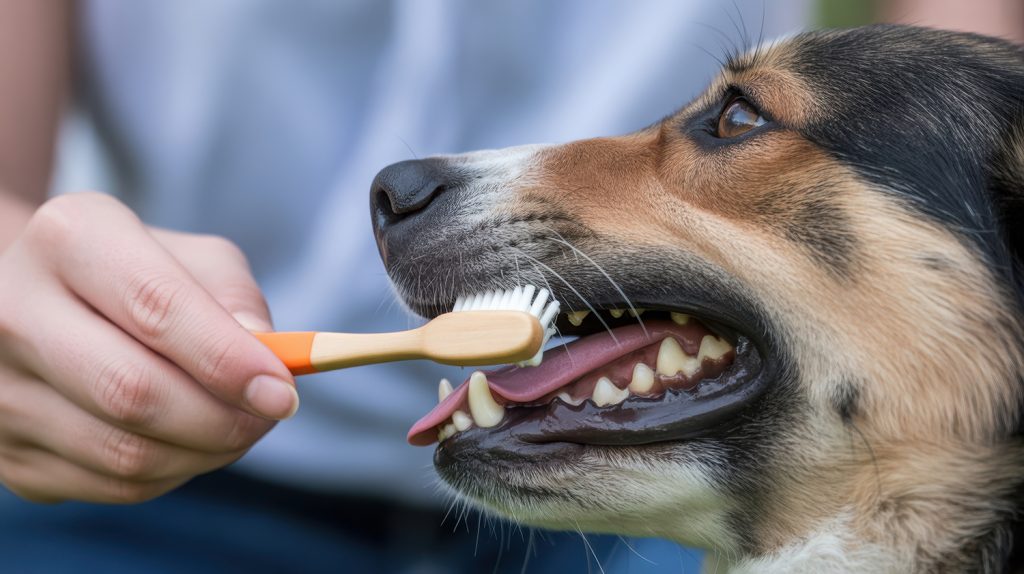
The gold standard for dog oral care at home is brushing. Here are some tips for getting started:
- Get your dog used to the idea of having his teeth brushed. Keep the sessions short and positive. Dip your finger in beef bouillon and massage his lips in a circular motion for 30 to 60 seconds once or twice a day for a few weeks, and then move on to the teeth and gums.
- Wrap your finger in gauze or place a toothbrush at a 45-degree angle to the teeth and clean in small, circular motions, lifting your dog’s lip if necessary. Because the side of the tooth that touches the cheek contains the most tartar, concentrate there.
- When you’re almost finished, brush vertically toward the inside of the mouth to clear any plaque you’ve dislodged.
- Use a brush designed especially for dogs; it’s smaller than a human toothbrush and has softer bristles. Toothbrushes that you can wear over your finger are also available.
- Use toothpaste designed for dogs; using your own toothpaste can cause distress and upset your dog’s stomach.
Develop a Regular Cleaning Routine
Consistency is key. Brush your dog’s teeth at least 2 to 3 times a week. Once a day brushing is ideal. The better you are at keeping a regular routine, the easier it will be on your dog and the more likely he will start to respond positively to you brushing his teeth. It will also help you remember to keep his teeth clean and healthy as you start to commit to a regular cycle.