
Summer Safety Tips Every Pet Owner Should Know
Hot Pavement – Paw Care
You probably wouldn’t walk barefoot across a hot parking lot in the middle of an Alabama summer. Neither should your dog.
One of the most overlooked summer dangers for pets isn’t the air temperature—it’s the ground beneath their feet. Sidewalks, asphalt, concrete, and even artificial turf can become hot enough to burn your dog’s paw pads in just minutes.
At Whitworth Animal Clinic in Madison, Alabama, we see preventable paw injuries every summer. Knowing when it’s safe to walk your dog can help keep them comfortable, healthy, and out of our veterinary clinic.
How Hot Does Pavement Get?
Many pet owners are surprised to learn how much hotter pavement becomes than the surrounding air.
Here are some examples:
| Air Temperature | Pavement Temperature |
|---|---|
| 77°F | Approximately 125°F |
| 86°F | Approximately 135°F |
| 95°F | Approximately 150°F |
At these temperatures, a dog’s paw pads can burn in less than one minute.
Dark asphalt absorbs and retains even more heat than lighter-colored concrete, making parking lots especially dangerous. Hot Pavement Burn’s Dog Paws!
Why Dogs Are at Risk – Hot Pavement – Paw Care
Although paw pads are thicker than human skin, they are still sensitive.
Walking across hot pavement can cause:
- Painful burns
- Blisters
- Cracked paw pads
- Peeling skin
- Infection
- Difficulty walking
Repeated exposure to hot surfaces can make these injuries even worse.
The Seven-Second Test
A simple rule can help protect your dog.
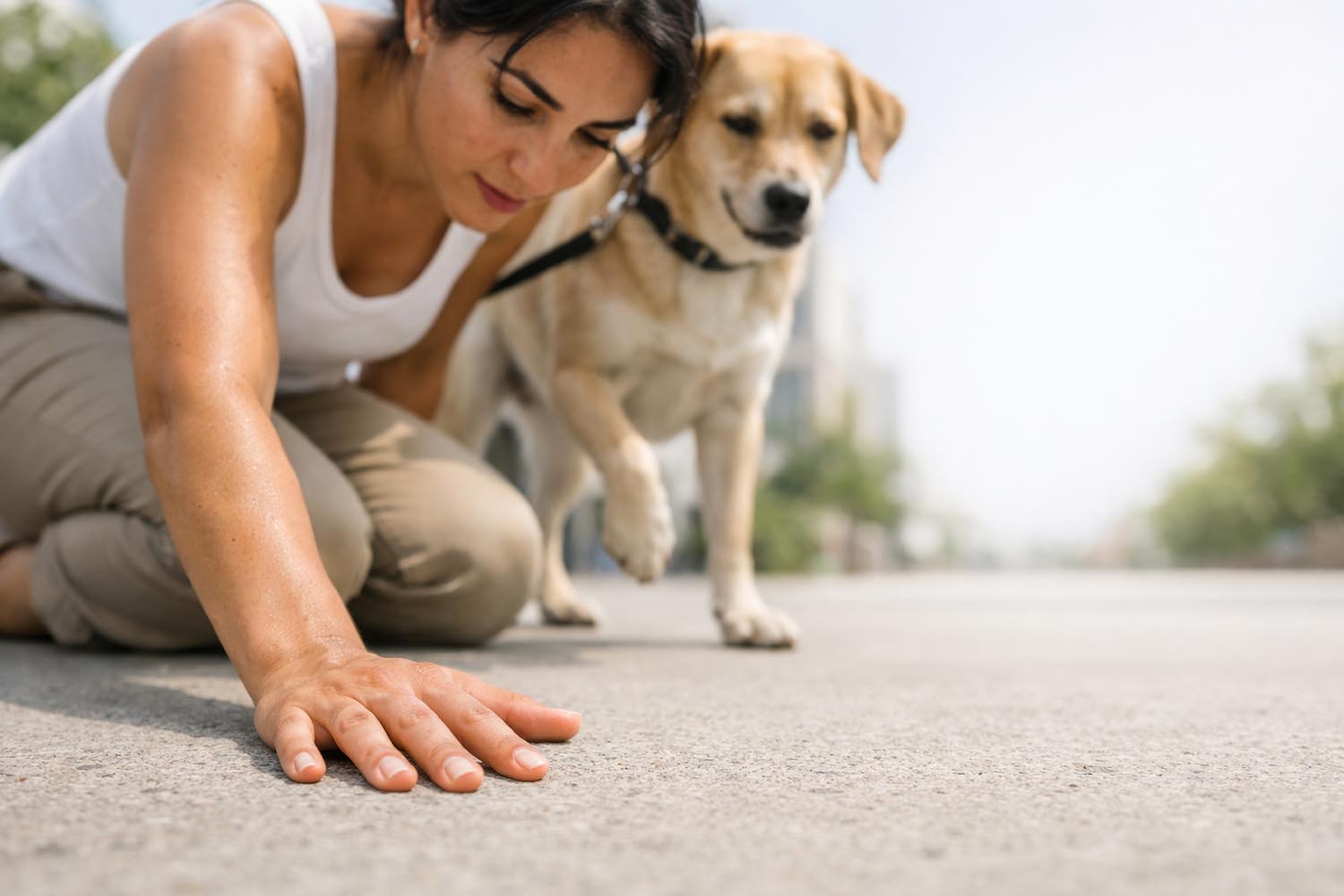
Place the back of your hand on the pavement for seven seconds.
- If it’s comfortable, it’s generally safe for your dog.
- If you need to pull your hand away because it’s too hot, it’s too hot for your dog’s paws.
This quick test takes only a few seconds and can prevent a painful injury. Hot Pavement Burn’s Dog Paws!
Signs Your Dog Has Burned Paw Pads
Watch for symptoms after a walk, including:
- Limping
- Refusing to walk
- Excessive licking or chewing at the feet
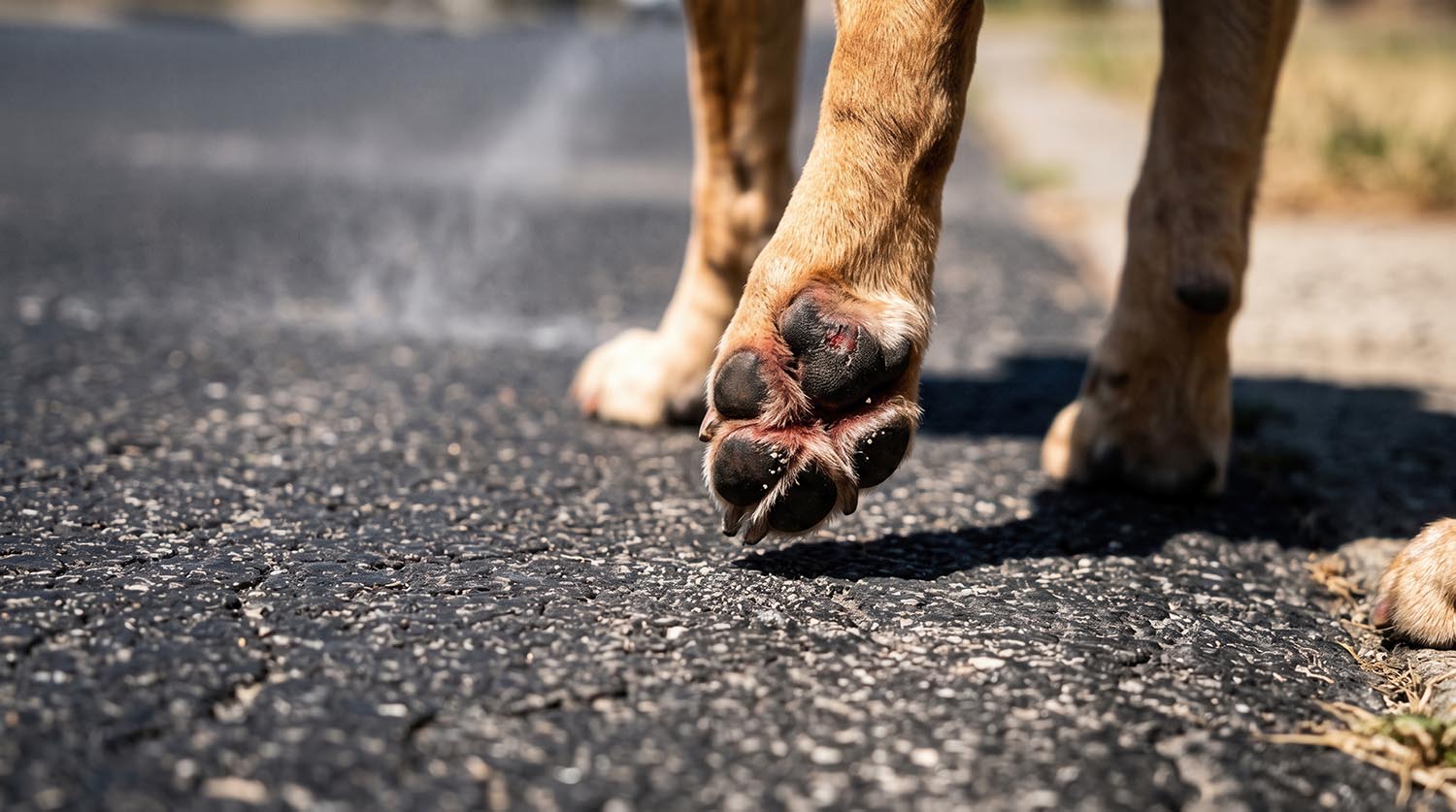
- Darkened or discolored paw pads
- Blisters
- Missing skin on the pads
- Bleeding
- Sensitivity when paws are touched
If you notice any of these signs, take your dog to Whitworth Animal Clinic as soon as possible.
What Should You Do if Your Dog Burns Their Paws?
If you suspect a paw burn:
Move your dog to a cool surface immediately.
Rinse the paws gently with cool (not ice-cold) water.
Avoid applying butter, oils, or human burn creams.
Prevent your dog from licking the injured paws if possible.
Contact Dr. Whitworth or Dr. Rice to schedule an evaluation. Paw burns are painful!
Even burns that appear minor can become infected if left untreated.



Leave A Comment